So let's say you're a guy who's been reading about boudoir pics (perhaps at THIS VERY BLOG), you find the idea intriguing, and you start to think that it might be nice to have some similar pictures of your special lady friend.
Today we're going to talk about how you might suggest that in a supportive and nonpressuring way. (Yes, that's right, it's another Unsolicited Relationship Advice post! Come for the racy pics and DJT rants, stay for the unsolicited relationship advice.)
I'm going to start with two baseline assumptions: (1) you already have a good relationship, and your lines of communication are open and clear; and (2) you have a good guess that she'd be receptive to the idea, or at least wouldn't be adamantly opposed to it.
If neither of those things is true, then this probably isn't the best time to go pushing for a boudoir shoot. As I've talked about before, boudoir pics frequently represent a significant gift of trust (not to mention a significant financial outlay, at least if you're using a good and established photographer), and if your relationship isn't currently as secure as it could be, then it may not be reasonable to ask for something that big. Meanwhile, if you happen to know that the lady would definitely not be open to the idea -- maybe she's extremely modest, or uncomfortable with her body at the moment, or this just plain isn't her style -- then, again, this might not be the time.
Boudoir isn't for everyone. It doesn't have to be for everyone. And with this as in all things: her body, her choice. Respect your partner's wishes, and don't push for something she truly does not want to do.
But assuming that she's curious and potentially into the idea, you shouldn't have to do a hard sell. What you might have to do is offer gentle encouragement, which I'd suggest structuring as follows:
1. Tell her why you want pictures of her.
This might be a hard one, because a lot of guys are unaccustomed to expressing their desires frankly and with sensitivity. The culture of Our Dumb Society hands you a whole lot of vocabulary about objectifying women at an emotional distance, but doesn't provide much help when it comes to earnestly and honestly telling your partner "you turn me on, and this is why."
To some extent, you're going to have to chart your own path here, and it's natural to feel self-conscious and awkward about that. It's totally normal to have flashbacks to the time you bared your heart to Mindy in ninth grade and got it stomped into paste and resolved to never ever do that again. Confessing your desires and being vulnerable -- even a little bit, even with a degree of self-protective irony -- is hard. It is!
But it's also really, really important. If you want her to do this for you, then you have to do this for her. You have to offer a little bit of vulnerability in turn and tell her, openly and with specificity, that the idea of having pictures of her turns you on, and why, and how.
There are a million impersonal beautiful women who are naked on the internet. You can look at them anytime. But there is only one lady you're asking to do this right now. So what you need to do is think hard and honestly about what makes her special, and why her pictures would be uniquely treasured, and why you want to see her, above and beyond all the other women in the world, in this light.
Then you have to tell her that. Many (read: all) women are self-conscious about perceived imperfections in their bodies, so this is where you really need to bolster her confidence that yes, she's attractive; yes, she's desirable; yes, you want to see her in pictures, and no one else in the world will do. Write it in a card if you can't work up the nerve to say it aloud (Valentine's and anniversaries are good for this, especially in combination with gifts as suggested below), or say it aloud if you can't work up the nerve to write it down -- whichever's easier. But tell her. Make it personal. Make her feel special, and make her understand why it's special to you.
2. Do the legwork for her.
Some women prefer to take charge and control their own projects from start to finish, and if your partner happens to be of this mindset, then you can safely skip this step. But if you're looking to make this as easy and stress-free as possible, then one of the ways you can do that is to look up boudoir photographers in your area. Figure out what's in your budget, who's got solid reviews, whose style you like, and whose aesthetic seems most likely to flatter your lady friend. If you know that she's more likely to be comfortable shooting with an all-female team, look for that.
Then, when you're ready to move forward with the proposal, you can point her to one or two of your top choices. Be ready to discuss why you picked out those photographers, and what in their portfolios made you think that they'd be able to put her at ease and portray her in the best light. Go through the samples together, if you like: this gives you an opportunity to talk about what she is and isn't comfortable showing, to get her thoughts on different poses and outfits (if you're thinking of buying lingerie in the future, listen carefully to what she likes), and to tell her (again! you can never do this too often!) how you'd like to see her.
3. Provide some inspiration.
Again, this might not be a step you need to spend much time on (if she prefers to work independently or wants to make it a surprise, step on out of the way), but if you think your partner would find it helpful, you might offer a little bit of inspiration as to her props or outfit.
I don't recommend laying out the entire ensemble and storyboarding her whole shoot for her -- it's supposed to be about what she likes and how she wants to be seen, and it's not for you to dictate her whole shoot -- but if you happened to buy an extra-nice piece of lingerie for Valentine's, or a special necklace for an anniversary, it might be a romantic gesture to ask for its inclusion. If the purpose of these pictures is not only to commemorate how lovely she looks, but her personal and irreplaceable importance to you, then including signifiers of your relationship in the shoot can add to the romance.
Besides, I'm a big advocate of building sentimental value into pieces by using them as touchstones as often as possible, e.g. giving a lovely trinket one year and then including that gift in a personal photograph the next year. It's a way to remember who you were at that moment in time, and how you felt about each other. Including the object as a symbol can help anchor the sentiment.
4. Offer to cover costs.
Good boudoir pics ain't cheap. You're paying for the time and talent of a photographer who's spent a lot of years building up those skills, and you're probably also paying for a makeup artist and hairstylist to help those pictures look as good as they possibly can. The investment is well worth it (really, you do not want to be the one who kicks off the Pinterest Fails of boudoir pics), but it is an investment.
So cover it. If you want the pics, don't ask her to pay for them. More than that, make a gift of the shoot. As I've discussed in prior posts (and there are lots of other accounts on the internet that will back me up on this), doing a boudoir shoot can be a great experience in building up a woman's confidence and helping her explore and embrace herself as an unabashedly sensual, beautiful creature -- but many women don't feel comfortable spending that much money on themselves, and for something that they might perceive as vain or frivolous.
If she doesn't have to pay for it, then she doesn't have to worry about that. Making a gift of the shoot removes both the financial pressure and the emotional pressure of having to worry about whether she's vain for wanting to do such a thing. Instead, her participation -- and the pictures -- becomes her reciprocal gift to you.
The flipside of this, however, is that I don't recommend springing for a shoot before you've discussed it with your partner and cleared it as something she really wants to do. This is not something I'd recommend as a surprise gift. If it's really not her thing, then she's stuck with a choice between doing something that she doesn't really want to do (and, spoiler, the pictures never come out looking great if the woman doesn't really want to be there, because confidence and enthusiasm are pretty key to boudoir), or potentially wasting a lot of money.
I think it's much better to wait until you've talked it over, settled on a photographer, and figured out a reasonable timetable for when she wants to do this (maybe she isn't totally happy with some aspect of her appearance right now and wants to take a couple of months to work on that first; for example, I totally ruined my nails recently by stripping them with acetone polish remover way too often, and it's probably going to be a couple of months before I have anything but stubby finger nubs going). Then you can go ahead and buy the gift shoot. But please, please don't lock her into anything by putting money down before you've talked.
And that concludes today's episode of Unsolicited Relationship Advice from a (Not-Yet-Existent) Romance Writer.
Showing posts with label boudoir. Show all posts
Showing posts with label boudoir. Show all posts
Monday, February 27, 2017

Friday, February 3, 2017
At Long Last, a Walkthrough (With Pictures!)
I really was going to do a detailed walkthrough of my boudoir shoot with Lori Mann, but I keep getting distracted looking at all the pretty pictures.
Look! Lori and Aleks made me look glamorous!! That is some bonafide miracle working right there, my friends.
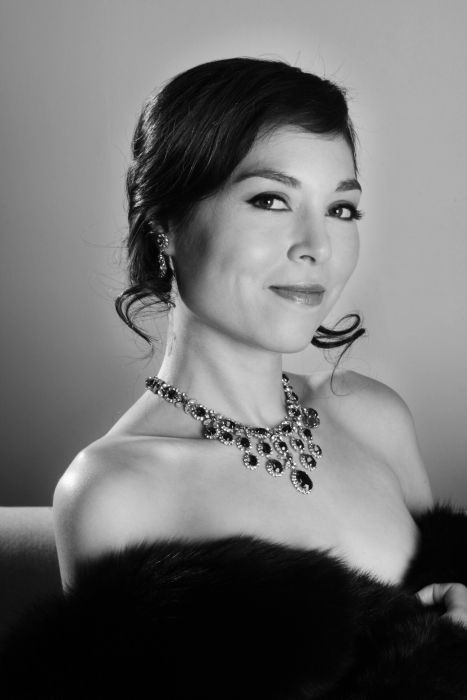
On the afternoon of the shoot, I showed up to the Center City studio with a ridiculously huge bag of clothes and props in tow, plus one big dramatic fur coat and a smaller fox stole. I had a vague notion of the sequence I wanted to do ("you meet a lady in a hotel bar and she turns out to be not too nice" / "in this shoot I will be playing a giant bitch who is perpetually unimpressed with everybody, which is to say, I'll be myself"), but it was mostly just to keep myself on track and semi-focused while Lori and Aleks did all the real work.
Both of them were so warm and easygoing that I immediately felt like we'd been friends forever, which is a really crucial and underappreciated talent for boudoir teams. Think about it: these ladies make their living getting women -- most of whom they've never met before, and many of whom are probably at least a little bit nervous about stripping down and showing their stuff for posterity -- to relax and have fun in front of the camera. That's hard! That takes some special interpersonal skills!
Which Lori and Aleks have, in addition to being really awesome at photography and makeup, respectively.
I have had some not-so-great experiences with other makeup artists in the past. I once flew out to Colorado for a photoshoot that ended up being completely unusable because the stylist (who was, to be fair, a newbie just starting out) stuck me with orange foundation, blue eyeshadow, and curls stiffer than mattress springs. I still don't have any pictures from my formal wedding album because I never liked the makeup from that day, either.
Because of these prior experiences, I was a little gunshy with Aleks. I shouldn't have been. That lady is a genius and master of her art, and although I was probably the worst kind of "augh oh no!" flinch-ful client while she was working on me, once she was through it was clear that I should have shut up and let her do her magic in peace. Because she did a great, great job. It was everything I'd hoped for and then some.
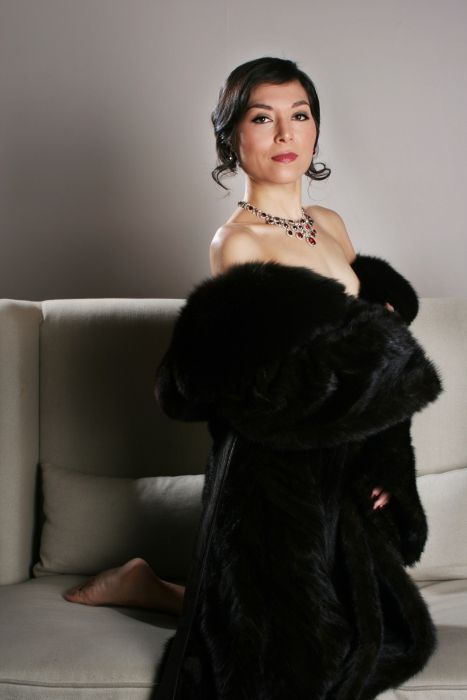
And then we took a bunch of pictures! and it was really fun! and I was never self-conscious even a little bit (how could I be, when they handled everything with such matter-of-fact ease?), and both Lori and Aleks were super attentive to detail throughout, catching every little glitch (smudged eyeliner, a bit of dirt on my foot) that might have threatened to make the pictures anything less than perfect.
The studio, by the way, is a fun little lesson in how selective framing and picture cropping can make a small and relatively empty space stand in for a number of sets. There's a lot of sleight-of-hand that goes on behind the scenes in how the furniture and backdrops are arranged. It's pretty neat to see in person.
Lori helped me through some poses and made it very easy to fake being an Actual Model, and at the end of the day I got to look over the raw shots on her computer and pick out which ones I wanted.

The hardest part was narrowing it down to just a few (well, relatively a few). But that's okay. I can always go back and take some more, right?
From start to finish, including picture review and selection, the whole thing took about five hours. We shot two sets, each with its own outfit and mini-storyline. All of these are from the first set; I'll post a picture from the other one next time I get to talking about boudoir.
All told, it was a fabulous experience and I can't wait until I get to shoot with them again.
Look! Lori and Aleks made me look glamorous!! That is some bonafide miracle working right there, my friends.
On the afternoon of the shoot, I showed up to the Center City studio with a ridiculously huge bag of clothes and props in tow, plus one big dramatic fur coat and a smaller fox stole. I had a vague notion of the sequence I wanted to do ("you meet a lady in a hotel bar and she turns out to be not too nice" / "in this shoot I will be playing a giant bitch who is perpetually unimpressed with everybody, which is to say, I'll be myself"), but it was mostly just to keep myself on track and semi-focused while Lori and Aleks did all the real work.
Both of them were so warm and easygoing that I immediately felt like we'd been friends forever, which is a really crucial and underappreciated talent for boudoir teams. Think about it: these ladies make their living getting women -- most of whom they've never met before, and many of whom are probably at least a little bit nervous about stripping down and showing their stuff for posterity -- to relax and have fun in front of the camera. That's hard! That takes some special interpersonal skills!
Which Lori and Aleks have, in addition to being really awesome at photography and makeup, respectively.
I have had some not-so-great experiences with other makeup artists in the past. I once flew out to Colorado for a photoshoot that ended up being completely unusable because the stylist (who was, to be fair, a newbie just starting out) stuck me with orange foundation, blue eyeshadow, and curls stiffer than mattress springs. I still don't have any pictures from my formal wedding album because I never liked the makeup from that day, either.
Because of these prior experiences, I was a little gunshy with Aleks. I shouldn't have been. That lady is a genius and master of her art, and although I was probably the worst kind of "augh oh no!" flinch-ful client while she was working on me, once she was through it was clear that I should have shut up and let her do her magic in peace. Because she did a great, great job. It was everything I'd hoped for and then some.
And then we took a bunch of pictures! and it was really fun! and I was never self-conscious even a little bit (how could I be, when they handled everything with such matter-of-fact ease?), and both Lori and Aleks were super attentive to detail throughout, catching every little glitch (smudged eyeliner, a bit of dirt on my foot) that might have threatened to make the pictures anything less than perfect.
The studio, by the way, is a fun little lesson in how selective framing and picture cropping can make a small and relatively empty space stand in for a number of sets. There's a lot of sleight-of-hand that goes on behind the scenes in how the furniture and backdrops are arranged. It's pretty neat to see in person.
Lori helped me through some poses and made it very easy to fake being an Actual Model, and at the end of the day I got to look over the raw shots on her computer and pick out which ones I wanted.
The hardest part was narrowing it down to just a few (well, relatively a few). But that's okay. I can always go back and take some more, right?
From start to finish, including picture review and selection, the whole thing took about five hours. We shot two sets, each with its own outfit and mini-storyline. All of these are from the first set; I'll post a picture from the other one next time I get to talking about boudoir.
All told, it was a fabulous experience and I can't wait until I get to shoot with them again.
Wednesday, February 1, 2017
Boudoir vs. Porn
So I know I said this time I was going to do a walkthrough of a boudoir shoot, but actually I want to knock this post out first because I feel like doing some Abstract Philosophical Discussion right now.
Every now and then somebody asks me whether boudoir photography is the same as "porn." I don't think there's anything inherently bad about porn (its accompanying features, sure, but not the porn itself), but I do think boudoir is a very different thing, and in today's post I want to talk about why.
The reason, fundamentally, comes down to this: boudoir is about empowering women. Porn, by and large, is not. (I wrestled with the question of "is doing porn empowering to women?" for several years before concluding that generally the answer is no, at least not right now, not in This Dumb Society. There are a few narrow exceptions, but by and large I think the answer is mostly "no.")
That is the issue -- who holds the power, and what the ramifications of that are -- that distinguishes boudoir from porn.
It's not about artistic merit. There are boudoir photographers who produce beautiful works of art and others who just take pictures. There is pornography that has artistic merit (yes, there is; we can fight about this if you want) and there's a whole lot more that doesn't.
It's not about how revealing or explicit the pictures are, either. Boudoir tends to be softer (there's rarely full nudity and almost never anything beyond that), but that's not the decisive factor. There are plenty of "art nudes" and softcore sites that really aren't a whole lot more explicit.
The key distinction is about power. In boudoir, the woman has it. In porn, she generally doesn't. So, literally, one is empowering and the other is not.
Here's my argument for why:
1. Boudoir removes the element of money-as-coercion.
This is the big one. In boudoir, the woman is not being paid for the pictures. In porn, the actress/model is working for money, whether that's from a producer/studio or directly from fans.
In theory you might think this is a good thing (money should flow to the model! the women in porn are higher paid than the men!). In practice, that money often operates as coercion.
Porn models and actresses tend to be young; they tend to be less educated (in part because they're young); they frequently have limited options for supporting themselves financially outside porn. If you're dependent on that money for a living, then the promise of more money, or the threat of losing it, can be used as a cudgel to make you do things you wouldn't otherwise choose to do. It's like every long-suffering and short-skirted cocktail waitress who's forced to put on a smile and play along with a skeevy customer, but ramped up 100x.
In boudoir, because the woman isn't being paid for what she does, that element of coercion is gone. The absence of a financial incentive means that the woman has full artistic freedom. She can do exactly as she pleases, revealing as much or as little as she likes. She can walk away whenever she wants. All the power is hers.
2. In boudoir, the woman controls her own image.
Another aspect of power and coercion in porn is that the actress/model does not control her own image. Her pictures and/or videos go up on a website where they can be displayed, advertised, and manipulated without her input. She has little or no ability to take them down, and little or no ability to bury her past if and when she ever decides to try shedding it.
That doesn't happen in boudoir. The woman owns and controls her image. She might choose to grant permission for the photographer or makeup artist to use her pictures, but the pictures are hers, so she gets to choose. If she wants to limit those permissions, she can. If she wants them to never be on the internet at all, she can -- many boudoir photographers, like Lori Mann, transfer images via flash drive and good old-fashioned prints on paper, which means they're never stored or transmitted online (unless you choose to do that yourself) and can never be hacked.
Thus, in boudoir, your privacy is yours and, if you choose, inviolable. Of course if you want to make your images public, you can choose to do that, but nobody is going to force you.
3. Boudoir celebrates the woman as a person, and intimacy rather than anonymity.
This one is, I guess, more about the psychology and romance of it than hard dollars-and-cents economic coercion, but I think it's important and also goes to empowerment: boudoir is a deeply personal experience, a creation and celebration of the individual woman.
Her pictures might just be for herself, or they might be shared with someone very close to her, but they aren't meant for the faceless public and they aren't about turning her into a product. It's about her. No one else on earth could stand in her place or carry the same value as that individual woman.
In (most, not all, but most) porn, a woman is a widget: she is depersonalized, pushed into a more-or-less uniform mold, and put out for consumption. She is seldom her own person, and never known in great depth; most often she's a canvas for the viewer to project their own fantasies onto, and if there's any semblance of personal warmth or friendliness, it's as professional and superficial as an airline stewardess's smile.
Some of that's inevitable: that asymmetry exists between any performer and her audience. And it need not always be a bad thing; there are some women for whom that exhibitionism has its own thrill. But by and large, my perception is that porn churns through new faces and new bodies with little regard for them as anything other than novelties, and that it tends to evaluate women strictly for how profitably their bodies can be monetized, and that this is damaging rather than bolstering to women's self-esteem.
(I should note that this is mostly a criticism of the economics behind porn rather than the porn itself, but the effect's still there and it still exploits young women's uncertain self-esteem to pay them less, regardless of the damage that might do to their self-worth and sexuality. Coupled with the rampant misogyny that runs through the industry, the upshot is that they generally leave with little money and less pride.)
In porn, by and large, you're replaceable. You're processed and presented to a largely indifferent audience as one of many. There's no real relationship, and you're not particularly special.
In boudoir, it's the opposite. You are irreplaceable. You are the only one of you, and you are presented to a very tiny audience (maybe just yourself and your photographer). The privacy, exclusivity, and relationship between woman and viewer (if any) change the dynamic considerably.
It isn't about strangers gawking at a body. It's about the close and unique connection between people.
And that's why I think boudoir photography can be extremely empowering for women, and why I don't think it's much like porn at all.
Every now and then somebody asks me whether boudoir photography is the same as "porn." I don't think there's anything inherently bad about porn (its accompanying features, sure, but not the porn itself), but I do think boudoir is a very different thing, and in today's post I want to talk about why.
The reason, fundamentally, comes down to this: boudoir is about empowering women. Porn, by and large, is not. (I wrestled with the question of "is doing porn empowering to women?" for several years before concluding that generally the answer is no, at least not right now, not in This Dumb Society. There are a few narrow exceptions, but by and large I think the answer is mostly "no.")
That is the issue -- who holds the power, and what the ramifications of that are -- that distinguishes boudoir from porn.
It's not about artistic merit. There are boudoir photographers who produce beautiful works of art and others who just take pictures. There is pornography that has artistic merit (yes, there is; we can fight about this if you want) and there's a whole lot more that doesn't.
It's not about how revealing or explicit the pictures are, either. Boudoir tends to be softer (there's rarely full nudity and almost never anything beyond that), but that's not the decisive factor. There are plenty of "art nudes" and softcore sites that really aren't a whole lot more explicit.
The key distinction is about power. In boudoir, the woman has it. In porn, she generally doesn't. So, literally, one is empowering and the other is not.
Here's my argument for why:
1. Boudoir removes the element of money-as-coercion.
This is the big one. In boudoir, the woman is not being paid for the pictures. In porn, the actress/model is working for money, whether that's from a producer/studio or directly from fans.
In theory you might think this is a good thing (money should flow to the model! the women in porn are higher paid than the men!). In practice, that money often operates as coercion.
Porn models and actresses tend to be young; they tend to be less educated (in part because they're young); they frequently have limited options for supporting themselves financially outside porn. If you're dependent on that money for a living, then the promise of more money, or the threat of losing it, can be used as a cudgel to make you do things you wouldn't otherwise choose to do. It's like every long-suffering and short-skirted cocktail waitress who's forced to put on a smile and play along with a skeevy customer, but ramped up 100x.
In boudoir, because the woman isn't being paid for what she does, that element of coercion is gone. The absence of a financial incentive means that the woman has full artistic freedom. She can do exactly as she pleases, revealing as much or as little as she likes. She can walk away whenever she wants. All the power is hers.
2. In boudoir, the woman controls her own image.
Another aspect of power and coercion in porn is that the actress/model does not control her own image. Her pictures and/or videos go up on a website where they can be displayed, advertised, and manipulated without her input. She has little or no ability to take them down, and little or no ability to bury her past if and when she ever decides to try shedding it.
That doesn't happen in boudoir. The woman owns and controls her image. She might choose to grant permission for the photographer or makeup artist to use her pictures, but the pictures are hers, so she gets to choose. If she wants to limit those permissions, she can. If she wants them to never be on the internet at all, she can -- many boudoir photographers, like Lori Mann, transfer images via flash drive and good old-fashioned prints on paper, which means they're never stored or transmitted online (unless you choose to do that yourself) and can never be hacked.
Thus, in boudoir, your privacy is yours and, if you choose, inviolable. Of course if you want to make your images public, you can choose to do that, but nobody is going to force you.
3. Boudoir celebrates the woman as a person, and intimacy rather than anonymity.
This one is, I guess, more about the psychology and romance of it than hard dollars-and-cents economic coercion, but I think it's important and also goes to empowerment: boudoir is a deeply personal experience, a creation and celebration of the individual woman.
Her pictures might just be for herself, or they might be shared with someone very close to her, but they aren't meant for the faceless public and they aren't about turning her into a product. It's about her. No one else on earth could stand in her place or carry the same value as that individual woman.
In (most, not all, but most) porn, a woman is a widget: she is depersonalized, pushed into a more-or-less uniform mold, and put out for consumption. She is seldom her own person, and never known in great depth; most often she's a canvas for the viewer to project their own fantasies onto, and if there's any semblance of personal warmth or friendliness, it's as professional and superficial as an airline stewardess's smile.
Some of that's inevitable: that asymmetry exists between any performer and her audience. And it need not always be a bad thing; there are some women for whom that exhibitionism has its own thrill. But by and large, my perception is that porn churns through new faces and new bodies with little regard for them as anything other than novelties, and that it tends to evaluate women strictly for how profitably their bodies can be monetized, and that this is damaging rather than bolstering to women's self-esteem.
(I should note that this is mostly a criticism of the economics behind porn rather than the porn itself, but the effect's still there and it still exploits young women's uncertain self-esteem to pay them less, regardless of the damage that might do to their self-worth and sexuality. Coupled with the rampant misogyny that runs through the industry, the upshot is that they generally leave with little money and less pride.)
In porn, by and large, you're replaceable. You're processed and presented to a largely indifferent audience as one of many. There's no real relationship, and you're not particularly special.
In boudoir, it's the opposite. You are irreplaceable. You are the only one of you, and you are presented to a very tiny audience (maybe just yourself and your photographer). The privacy, exclusivity, and relationship between woman and viewer (if any) change the dynamic considerably.
It isn't about strangers gawking at a body. It's about the close and unique connection between people.
And that's why I think boudoir photography can be extremely empowering for women, and why I don't think it's much like porn at all.
Tuesday, January 31, 2017
Planning a Boudoir Set
In today's installment of my on-and-off thoughts on boudoir photography, we'll talk about planning out your concept for a boudoir set.
I find it useful to think of the shoot as a series of pictures telling a very simple story, and of the clothes and props as signifiers that move the story along. Building your photo set around a story concept helps keep it focused and cohesive, and the narrative gives a natural flow to the sequence of pictures.
What that story should be is, of course, up to you. I usually build mine around specific clothes or accessories that I want to show off, which tends to reduce my self-consciousness because I think of it more as showcasing the clothes than myself. But you could just as easily build it around occasions (wedding, birthday, anniversary) or character concepts (Salome, Mata Hari, or just you as yourself -- but "yourself" as a consciously developed character).
Once you settle on a concept, the next step is to build it out using props. There are two main points to consider here: (1) the visual impact of the props (picking pieces with contrasting colors, textures, and purposes helps the pictures pop); and (2) how the props convey your story through symbolic shorthand.
For example!, if you were doing a bridal set, the obvious props would be the wedding veil (sheer fabric and lace can be used for lots of interesting visual effects and light/shadow contrasts, e.g., light falling through a window and being filtered through the veil onto skin), the ring (his and hers; the classic wedding photographer's two-rings-stacked shot can be redone over skin, or you could play around with the man's ring by holding it poised over puckered lips, impaling it on a stiletto heel, whatever works for you), a bouquet of flowers (visual contrast with color and texture, gives you something to play with/tease/shred), and so forth. All of those props are immediately recognizable as wedding symbols, and all can be used to center photographs.
If you wanted to do a character set -- let's say you wanted to play Mata Hari -- then you might pull together some turn-of-the-century Orientalist jewelry and a coin-draped dancer's bra, silk scarves, jeweled slippers, a worn satchel full of maps and papers to be caught rifling through. Theda Bara eyes, vamp lips, something gilded in the hair. The story: Mata Hari spying on a sleeping lover's work, and undressing to distract him after being caught peeking at the reports tucked into his satchel.
And if you wanted to just be yourself, then you'd pick through the symbols and signifiers of your own life (or your shared life together with the pictures' intended recipient), drawing on whatever you felt was both sentimentally significant and visually striking. A college sweater from back when you were boyfriend/girlfriend, a kitschy gift from an early date, a grandmother's cherished heirloom necklace. Whatever speaks to you.
Don't feel limited to lingerie. I've never once in my life done the standard bra-and-panties thing, and I don't see any reason that anyone else should feel bound to that either (of course, if you want to do it, that's a different story entirely!). Pick clothes you feel comfortable in. If an oversized T-shirt or a silly hat with novelty stockings is more authentically you, then do that. The point, after all, is to convey some aspect of your own personality, not to come off as an assembly-line Generic Widget o' Sex.
Couple of quick practical notes:
-- be careful about clothes or accessories that are likely to mess up your hair or makeup if they have to be pulled over your head.
-- if you're wearing stockings, bring an extra pair in case of runs.
-- if you have painted nails or toenails, bring the polish in case you need to touch up big chips.
-- there's a reason so many classic strip dancers and burlesque performers like to use scarves and feathered fans in their dances: you can do a lot with those big swirly splashes of color and sensual textures. While you needn't use a pair of peacock fans in your set, the basic premise might be worth considering: what would be fun to drag and drape over skin?
-- you can get a lot of miscellaneous props cheap on eBay; this is particularly useful for background stuff like colorful glass bottles, weird taxidermy, etc. It's fun to poke around looking at all the bizarre stuff for sale, and sometimes you get good ideas browsing through the listings.
-- keep in mind that the camera won't show the entire studio, so you really only need to build out a tiny part of the background behind your pose. I think it's better to have one or two strong symbolic pieces than a whole bunch of clutter (remember, you're the center focus, not the props, and you don't want to distract from that), so in general I'd recommend just picking out a few minimal signifiers per scene. If you need more than that, you're probably looking at a location shoot rather than a studio shoot anyway.
-- finally, although it's not really a prop-prop, it's often prudent to bring a little bottle of juice or a few pieces of candy to keep yourself from flagging. Even a mini shoot takes a few hours, and holding poses can be more challenging than you might expect. It's a good idea to have a light snack on hand, although I would recommend something compact and calorie-dense so you don't have to worry about whether the bulk will show in the pictures (at my very first shoot we stopped for pizza halfway through, which was a BAD IDEA; take it from me, you do not want to house half a pizza and then immediately go take a bunch of pictures with nearly-no clothes on).
Next up: what to expect at the actual shoot.
I find it useful to think of the shoot as a series of pictures telling a very simple story, and of the clothes and props as signifiers that move the story along. Building your photo set around a story concept helps keep it focused and cohesive, and the narrative gives a natural flow to the sequence of pictures.
What that story should be is, of course, up to you. I usually build mine around specific clothes or accessories that I want to show off, which tends to reduce my self-consciousness because I think of it more as showcasing the clothes than myself. But you could just as easily build it around occasions (wedding, birthday, anniversary) or character concepts (Salome, Mata Hari, or just you as yourself -- but "yourself" as a consciously developed character).
Once you settle on a concept, the next step is to build it out using props. There are two main points to consider here: (1) the visual impact of the props (picking pieces with contrasting colors, textures, and purposes helps the pictures pop); and (2) how the props convey your story through symbolic shorthand.
For example!, if you were doing a bridal set, the obvious props would be the wedding veil (sheer fabric and lace can be used for lots of interesting visual effects and light/shadow contrasts, e.g., light falling through a window and being filtered through the veil onto skin), the ring (his and hers; the classic wedding photographer's two-rings-stacked shot can be redone over skin, or you could play around with the man's ring by holding it poised over puckered lips, impaling it on a stiletto heel, whatever works for you), a bouquet of flowers (visual contrast with color and texture, gives you something to play with/tease/shred), and so forth. All of those props are immediately recognizable as wedding symbols, and all can be used to center photographs.
If you wanted to do a character set -- let's say you wanted to play Mata Hari -- then you might pull together some turn-of-the-century Orientalist jewelry and a coin-draped dancer's bra, silk scarves, jeweled slippers, a worn satchel full of maps and papers to be caught rifling through. Theda Bara eyes, vamp lips, something gilded in the hair. The story: Mata Hari spying on a sleeping lover's work, and undressing to distract him after being caught peeking at the reports tucked into his satchel.
And if you wanted to just be yourself, then you'd pick through the symbols and signifiers of your own life (or your shared life together with the pictures' intended recipient), drawing on whatever you felt was both sentimentally significant and visually striking. A college sweater from back when you were boyfriend/girlfriend, a kitschy gift from an early date, a grandmother's cherished heirloom necklace. Whatever speaks to you.
Don't feel limited to lingerie. I've never once in my life done the standard bra-and-panties thing, and I don't see any reason that anyone else should feel bound to that either (of course, if you want to do it, that's a different story entirely!). Pick clothes you feel comfortable in. If an oversized T-shirt or a silly hat with novelty stockings is more authentically you, then do that. The point, after all, is to convey some aspect of your own personality, not to come off as an assembly-line Generic Widget o' Sex.
Couple of quick practical notes:
-- be careful about clothes or accessories that are likely to mess up your hair or makeup if they have to be pulled over your head.
-- if you're wearing stockings, bring an extra pair in case of runs.
-- if you have painted nails or toenails, bring the polish in case you need to touch up big chips.
-- there's a reason so many classic strip dancers and burlesque performers like to use scarves and feathered fans in their dances: you can do a lot with those big swirly splashes of color and sensual textures. While you needn't use a pair of peacock fans in your set, the basic premise might be worth considering: what would be fun to drag and drape over skin?
-- you can get a lot of miscellaneous props cheap on eBay; this is particularly useful for background stuff like colorful glass bottles, weird taxidermy, etc. It's fun to poke around looking at all the bizarre stuff for sale, and sometimes you get good ideas browsing through the listings.
-- keep in mind that the camera won't show the entire studio, so you really only need to build out a tiny part of the background behind your pose. I think it's better to have one or two strong symbolic pieces than a whole bunch of clutter (remember, you're the center focus, not the props, and you don't want to distract from that), so in general I'd recommend just picking out a few minimal signifiers per scene. If you need more than that, you're probably looking at a location shoot rather than a studio shoot anyway.
-- finally, although it's not really a prop-prop, it's often prudent to bring a little bottle of juice or a few pieces of candy to keep yourself from flagging. Even a mini shoot takes a few hours, and holding poses can be more challenging than you might expect. It's a good idea to have a light snack on hand, although I would recommend something compact and calorie-dense so you don't have to worry about whether the bulk will show in the pictures (at my very first shoot we stopped for pizza halfway through, which was a BAD IDEA; take it from me, you do not want to house half a pizza and then immediately go take a bunch of pictures with nearly-no clothes on).
Next up: what to expect at the actual shoot.
Sunday, January 29, 2017
Choosing a Boudoir Team
I'll probably be posting about boudoir photography a lot in the next
few days or weeks; for various reasons I've been thinking about it a
fair bit, and since this is my blog I can just ramble about whatever I
want AND NOBODY CAN STOP ME AHAHAHAHAAA.
But before I launch into all of that, I want to preface it by saying: it's not just vanity. I think that sometimes, for some women, it's hard to conceive of spending that much time and money on pictures of yourself. It can feel like a frivolity (which, sure, it kinda is; certainly I'd never argue it's a necessity), or like a needless vanity.
I'd like to gently push back against that idea. First, as I said earlier, I think a gift of boudoir pictures can be a deeply romantic gesture: it's a symbolic and literal giving of the self, and an expression of both intimate confidence and intimate vulnerability. It isn't all about you; in the context of a relationship, it can be a significant gift to share.
But also, I'd argue that vanity can sometimes be a good thing.
You should be proud of yourself. You should consider yourself worth admiring. Few of us suffer from too much self-confidence, and taking a measure of pride in yourself is, in my view, a good thing. If it motivates you to get a little more exercise, eat mindfully, and avoid self-destructive habits, then I am all for vanity. And I feel pretty strongly that women who own their sexuality and are possessed of solid self-esteem are more likely to assert themselves in relationships and less likely to settle for partners who don't afford them the respect they're due, so I'm all in favor of whatever helps strengthen that, too.
YOU CAN BE VAIN. IT'S OKAY. I GIVE YOU PERMISSION.
So! With that out of the way, I'd like to start walking you through the process, with some thoughts on how you might maximize your chances of having a good experience and getting some nice pictures.
In my previous post on boudoir photography, I talked a little about what I think the overarching goals of the art form can be: empowerment, exploration, and capturing a sense of one's unique sensibility, whether that's playful or sultry or anything else you like. But I didn't really say much about how you actually do that.
First (and foremost!): Find a boudoir team that is experienced, approachable, and versatile.
The best teams have a gift for bringing out each woman's individual personality, rather than trying to airbrush them all into the same artifice.
In Philadelphia, I opted to work with Lori Mann and Aleksandra Ambrozy in part because I saw that talent for showcasing diverse beauties demonstrated in their portfolios. Lori's blog post Rockin' Her Curves celebrates a plus-sized model -- but more than just the complimentary words and pretty pictures, I appreciated how the set was put together. It shows a team that knows how to bring out the lady's best features and portray her with poise and confidence.

The poses flatter the model: the first is soft and reflective, framed to emphasize her upper body, while the second (reposted above) arches her body, pulling her back and arms upward in a series of curves that elongate her figure. The lingerie is thoughtfully selected: that black lace garter has a broad band which wraps around the model's hips instead of cutting in, and the leopard-print motif (brief, blanket, and heels) suggests a fierce and sassy air, which the model's facial expression and black gloves accentuate.
Put together, what you see is a plus-sized lady whose pose and outfit indicate a retro-kitten playfulness, but with an underlying fierceness; whose clothes, framing, and positioning flatter her figure without hiding or making excuses for anything; and whose makeup, softly smoky but not hard-edged or overwhelming, completes the overall picture of a woman who's firmly in charge of herself but more than ready to have fun.
That's a lot to pack into two pictures, but it's there, and it celebrates a lady with an ever-so-slightly untraditional look. She doesn't look like every other model on the internet. She looks like herself.
I was similarly impressed by Aleksandra's blog post on a fall wedding where the bride wanted a classic look that didn't compromise her freckles. I can't think of a truer expression of "letting your natural beauty shine through" than, literally, letting your natural beauty shine through instead of covering it under a thick layer of makeup -- and that's exactly what Aleksandra did, and the effect was absolutely beautiful. Again and again on her blog, I saw a great talent for finding just the right blend of color and texture to bring out each woman's natural beauty, and an impressive fluency with lots of different looks and complexions.
Based on that, I was pretty confident they'd be able to do whatever wackiness I wanted to try. Ideally, your prospective photography team (and "team" is important; a big part of this is having professional makeup and hair, not just the photographer) will be able to do the same.
Next time, we'll talk about settling on a look and planning out a set.
But before I launch into all of that, I want to preface it by saying: it's not just vanity. I think that sometimes, for some women, it's hard to conceive of spending that much time and money on pictures of yourself. It can feel like a frivolity (which, sure, it kinda is; certainly I'd never argue it's a necessity), or like a needless vanity.
I'd like to gently push back against that idea. First, as I said earlier, I think a gift of boudoir pictures can be a deeply romantic gesture: it's a symbolic and literal giving of the self, and an expression of both intimate confidence and intimate vulnerability. It isn't all about you; in the context of a relationship, it can be a significant gift to share.
But also, I'd argue that vanity can sometimes be a good thing.
You should be proud of yourself. You should consider yourself worth admiring. Few of us suffer from too much self-confidence, and taking a measure of pride in yourself is, in my view, a good thing. If it motivates you to get a little more exercise, eat mindfully, and avoid self-destructive habits, then I am all for vanity. And I feel pretty strongly that women who own their sexuality and are possessed of solid self-esteem are more likely to assert themselves in relationships and less likely to settle for partners who don't afford them the respect they're due, so I'm all in favor of whatever helps strengthen that, too.
YOU CAN BE VAIN. IT'S OKAY. I GIVE YOU PERMISSION.
So! With that out of the way, I'd like to start walking you through the process, with some thoughts on how you might maximize your chances of having a good experience and getting some nice pictures.
In my previous post on boudoir photography, I talked a little about what I think the overarching goals of the art form can be: empowerment, exploration, and capturing a sense of one's unique sensibility, whether that's playful or sultry or anything else you like. But I didn't really say much about how you actually do that.
First (and foremost!): Find a boudoir team that is experienced, approachable, and versatile.
The best teams have a gift for bringing out each woman's individual personality, rather than trying to airbrush them all into the same artifice.
In Philadelphia, I opted to work with Lori Mann and Aleksandra Ambrozy in part because I saw that talent for showcasing diverse beauties demonstrated in their portfolios. Lori's blog post Rockin' Her Curves celebrates a plus-sized model -- but more than just the complimentary words and pretty pictures, I appreciated how the set was put together. It shows a team that knows how to bring out the lady's best features and portray her with poise and confidence.
The poses flatter the model: the first is soft and reflective, framed to emphasize her upper body, while the second (reposted above) arches her body, pulling her back and arms upward in a series of curves that elongate her figure. The lingerie is thoughtfully selected: that black lace garter has a broad band which wraps around the model's hips instead of cutting in, and the leopard-print motif (brief, blanket, and heels) suggests a fierce and sassy air, which the model's facial expression and black gloves accentuate.
Put together, what you see is a plus-sized lady whose pose and outfit indicate a retro-kitten playfulness, but with an underlying fierceness; whose clothes, framing, and positioning flatter her figure without hiding or making excuses for anything; and whose makeup, softly smoky but not hard-edged or overwhelming, completes the overall picture of a woman who's firmly in charge of herself but more than ready to have fun.
That's a lot to pack into two pictures, but it's there, and it celebrates a lady with an ever-so-slightly untraditional look. She doesn't look like every other model on the internet. She looks like herself.
I was similarly impressed by Aleksandra's blog post on a fall wedding where the bride wanted a classic look that didn't compromise her freckles. I can't think of a truer expression of "letting your natural beauty shine through" than, literally, letting your natural beauty shine through instead of covering it under a thick layer of makeup -- and that's exactly what Aleksandra did, and the effect was absolutely beautiful. Again and again on her blog, I saw a great talent for finding just the right blend of color and texture to bring out each woman's natural beauty, and an impressive fluency with lots of different looks and complexions.
Based on that, I was pretty confident they'd be able to do whatever wackiness I wanted to try. Ideally, your prospective photography team (and "team" is important; a big part of this is having professional makeup and hair, not just the photographer) will be able to do the same.
Next time, we'll talk about settling on a look and planning out a set.
Tuesday, January 24, 2017
On Inclusive Beauty
Lately, in thinking about romance and boudoir and trying not to think about current events (any more than I have to), I've been mulling over the inclusiveness of beauty.
In modern romance writing, there's been a real push toward including different types of characters. Old-school romances typically centered around impossibly gorgeous (and always white, and always able-bodied) women, with chiseled hunks for heroes and giant showers of money raining down upon them from the heavens. And you can still find some of those stories here and there, but they're nowhere near as common as they used to be.
Modern romances, more often than not, feature heroines who probably wouldn't feature as Maxim cover models. Lots of them have to work for a living, and they aren't always financially secure, let alone rich. They tend to represent a broader swath of ages, races, and physical and psychological traits. (In particular, because it pushes back against a common crutch, I want to commend Courtney Milan for including a black heroine in her Regency historical "Talk Sweetly to Me." It's such a common misconception that historicals can't have minority characters that this excuse even gets trotted out to "explain" why fantasy worlds can't have minorities in pseudo-medieval settings, because that wouldn't be "historically accurate." In actuality, of course, true historical accuracy would include characters from cross-cultural exchanges [all these historicals include exotic silks, teas, and spices, so why never any people from their cultures?], and it's good to see cracks starting to appear in the old whitewashed wall that artificially excluded them.
Plus it's just a good story with smart dialogue and witty, appealing characters. None of the rest would matter a bit if the story weren't any good. But it is!)
I think this is good, and I also think it's maybe uniquely important as it comes to romance.
Representation in fiction is always important. It's important that people get to see versions of themselves reflected on the page and on the screen, and that these versions be recognizably human, not just Morgan Freeman as Long-Suffering Saintly Martyr Mk. 239872394. (There's a time and a place for that too, but the time and place was "the '80s.")
But it's uniquely important as it comes to romance, I think, and the reason for that is bound up with the fraught and confusing thing that it is to be a woman in This Dumb Country, where you are bombarded from a very young age with images of an idealized and unattainable beauty that most of us never begin to approach. With conflicting and impossibly complicated messages about sexuality, with varied stripes of shame for having a female body, with -- if you're lucky -- the conscious awareness of all the ways in which you're expected to Perform Being a Woman, and the penalties that society is more than ready to impose if your performance falls the slightest bit short.
And then, maybe, a nagging sense that pretty clothes and painted nails and all of that might be frivolous and restrictive and hearkening back to prescriptive femininity, sure... but they're also kind of fun, at least once in a while, and is that so wrong?
So there's all this stuff about how having a female body is shameful and gross and weird, but also you should put it on display because it's beautiful, but also you can't put it on display because that would be attention-seeking and/or playing into the hands of the Patriarchy, and also it's not perfect enough to be displayed anyway, and and and. And then on top of that, when it comes to sex and relationships, you have to consider how the other party reacts. What does your partner find sexy? Because that's all shaped by cultural influences too, and very few people are willing to speak frankly about it (especially early on in a relationship), so pretty much you get to run through that whole entire maze again, but this time wearing somebody else's glasses.
No wonder all my female friends -- yes, every single one of them -- go a little bit crazy about this stuff. No wonder every teen and 20-something woman I know, no matter how gorgeous, is secretly and agonizingly self-conscious about some perceived flaw. Some of us grow out of that with time and experience, but I think every woman goes through it in youth, and many stay in it forever.
In this context, the inclusivity of representation in romance is invaluable. Because what it says is that you don't have to be conventionally beautiful to be desirable. That's the true heart of the fantasy: not that you can be cookie-cutter beautiful (which no one would believe, because we all know it isn't true; standard beauty definitions are about exclusivity, not inclusivity), but that you can be uniquely and irresistably desired. That in the eyes of at least one lover, you can be wanted, and you can be wanted as nothing else in the world is.
What romance is really about is not beauty. It's about desire. It is that sense of wanting, of being totally accepted and appreciated even after revealing all your weaknesses. And when that comes as a celebration of individuality, then I believe it's enormously empowering to women, because it says that you are not inadequate, but unique. That you are not a lesser version of some other thing, but a whole version of yourself, and that what you are is worth wanting.
So how does this tie into boudoir photography? At its best, I think, boudoir photography reaches for the same goals: celebrating uniqueness, appreciating difference, and reassuring women that they are attractive and desirable because of their own individual selves. At its best, it allows women to express their personalities and explore their sexuality in a controlled setting, where they can try out different visions of sensuality and have final say over which, if any, of those images they want to be lasting. The choice is yours and the control is yours.
Now, I'll be the first to admit that boudoir photography doesn't always achieve that lofty goal. There are some boudoir photographers who seem, judging by their portfolios, to push every woman into playacting the same porno-doll role, which is in my opinion not great. (NB: If that's what you want to do, do it! More power to you! But if every woman in the portfolio is made up the same way and wearing the same outfit and posed in the same position then I start to think that maaaybe what I'm seeing is less the women's vision than the photographer's, and that I'm not so into.)
But there are others who have a great talent for bringing out and showcasing the uniqueness of their subjects, and if you can find one of those teams, then I think it can be a really worthwhile experience in (literally!) getting to see yourself as a creature of desire. In stepping out of your own skin and looking through different eyes and seeing your own kind of beauty.
And I also think that's why it can be a profoundly romantic thing: because if you choose to put yourself before the camera's eye, and if you choose to keep those images, then you're memorializing the flaws as well as the beauty. Should you give those images away, you are (again, literally) making a gift of your self, and there is bound up in that a level of trust and vulnerability. Maybe a lot, maybe just a little, but always something.
Next time I'll talk in more concrete terms about some of the ways in which I think you can (hopefully) achieve some of those goals, but that's more or less my mission statement for what I think they are: empowerment, exploration, and the celebration of individual beauty in the manner and extent that each woman chooses for herself.
In modern romance writing, there's been a real push toward including different types of characters. Old-school romances typically centered around impossibly gorgeous (and always white, and always able-bodied) women, with chiseled hunks for heroes and giant showers of money raining down upon them from the heavens. And you can still find some of those stories here and there, but they're nowhere near as common as they used to be.
Modern romances, more often than not, feature heroines who probably wouldn't feature as Maxim cover models. Lots of them have to work for a living, and they aren't always financially secure, let alone rich. They tend to represent a broader swath of ages, races, and physical and psychological traits. (In particular, because it pushes back against a common crutch, I want to commend Courtney Milan for including a black heroine in her Regency historical "Talk Sweetly to Me." It's such a common misconception that historicals can't have minority characters that this excuse even gets trotted out to "explain" why fantasy worlds can't have minorities in pseudo-medieval settings, because that wouldn't be "historically accurate." In actuality, of course, true historical accuracy would include characters from cross-cultural exchanges [all these historicals include exotic silks, teas, and spices, so why never any people from their cultures?], and it's good to see cracks starting to appear in the old whitewashed wall that artificially excluded them.
Plus it's just a good story with smart dialogue and witty, appealing characters. None of the rest would matter a bit if the story weren't any good. But it is!)
I think this is good, and I also think it's maybe uniquely important as it comes to romance.
Representation in fiction is always important. It's important that people get to see versions of themselves reflected on the page and on the screen, and that these versions be recognizably human, not just Morgan Freeman as Long-Suffering Saintly Martyr Mk. 239872394. (There's a time and a place for that too, but the time and place was "the '80s.")
But it's uniquely important as it comes to romance, I think, and the reason for that is bound up with the fraught and confusing thing that it is to be a woman in This Dumb Country, where you are bombarded from a very young age with images of an idealized and unattainable beauty that most of us never begin to approach. With conflicting and impossibly complicated messages about sexuality, with varied stripes of shame for having a female body, with -- if you're lucky -- the conscious awareness of all the ways in which you're expected to Perform Being a Woman, and the penalties that society is more than ready to impose if your performance falls the slightest bit short.
And then, maybe, a nagging sense that pretty clothes and painted nails and all of that might be frivolous and restrictive and hearkening back to prescriptive femininity, sure... but they're also kind of fun, at least once in a while, and is that so wrong?
So there's all this stuff about how having a female body is shameful and gross and weird, but also you should put it on display because it's beautiful, but also you can't put it on display because that would be attention-seeking and/or playing into the hands of the Patriarchy, and also it's not perfect enough to be displayed anyway, and and and. And then on top of that, when it comes to sex and relationships, you have to consider how the other party reacts. What does your partner find sexy? Because that's all shaped by cultural influences too, and very few people are willing to speak frankly about it (especially early on in a relationship), so pretty much you get to run through that whole entire maze again, but this time wearing somebody else's glasses.
No wonder all my female friends -- yes, every single one of them -- go a little bit crazy about this stuff. No wonder every teen and 20-something woman I know, no matter how gorgeous, is secretly and agonizingly self-conscious about some perceived flaw. Some of us grow out of that with time and experience, but I think every woman goes through it in youth, and many stay in it forever.
In this context, the inclusivity of representation in romance is invaluable. Because what it says is that you don't have to be conventionally beautiful to be desirable. That's the true heart of the fantasy: not that you can be cookie-cutter beautiful (which no one would believe, because we all know it isn't true; standard beauty definitions are about exclusivity, not inclusivity), but that you can be uniquely and irresistably desired. That in the eyes of at least one lover, you can be wanted, and you can be wanted as nothing else in the world is.
What romance is really about is not beauty. It's about desire. It is that sense of wanting, of being totally accepted and appreciated even after revealing all your weaknesses. And when that comes as a celebration of individuality, then I believe it's enormously empowering to women, because it says that you are not inadequate, but unique. That you are not a lesser version of some other thing, but a whole version of yourself, and that what you are is worth wanting.
So how does this tie into boudoir photography? At its best, I think, boudoir photography reaches for the same goals: celebrating uniqueness, appreciating difference, and reassuring women that they are attractive and desirable because of their own individual selves. At its best, it allows women to express their personalities and explore their sexuality in a controlled setting, where they can try out different visions of sensuality and have final say over which, if any, of those images they want to be lasting. The choice is yours and the control is yours.
Now, I'll be the first to admit that boudoir photography doesn't always achieve that lofty goal. There are some boudoir photographers who seem, judging by their portfolios, to push every woman into playacting the same porno-doll role, which is in my opinion not great. (NB: If that's what you want to do, do it! More power to you! But if every woman in the portfolio is made up the same way and wearing the same outfit and posed in the same position then I start to think that maaaybe what I'm seeing is less the women's vision than the photographer's, and that I'm not so into.)
But there are others who have a great talent for bringing out and showcasing the uniqueness of their subjects, and if you can find one of those teams, then I think it can be a really worthwhile experience in (literally!) getting to see yourself as a creature of desire. In stepping out of your own skin and looking through different eyes and seeing your own kind of beauty.
And I also think that's why it can be a profoundly romantic thing: because if you choose to put yourself before the camera's eye, and if you choose to keep those images, then you're memorializing the flaws as well as the beauty. Should you give those images away, you are (again, literally) making a gift of your self, and there is bound up in that a level of trust and vulnerability. Maybe a lot, maybe just a little, but always something.
Next time I'll talk in more concrete terms about some of the ways in which I think you can (hopefully) achieve some of those goals, but that's more or less my mission statement for what I think they are: empowerment, exploration, and the celebration of individual beauty in the manner and extent that each woman chooses for herself.
Subscribe to:
Posts (Atom)